
Read Clark County Deed Records by Instrument Type
Deeds are only one part of what the Clark County Recorder keeps. The office also holds mortgages, releases, liens, easements, covenants, plats, surveys, leases, trusts, affidavits, assignments, and contracts. Each instrument tells a different story. A deed records a transfer of ownership. A mortgage or lien records an encumbrance instead. Before trusting any search result, read the instrument's actual title. Then read the parties named in it.
| Deed type | What the instrument does | Typical context |
|---|---|---|
| Warranty deed | Conveys the stated interest with deed covenants | Ordinary negotiated transfer |
| Quitclaim deed | Conveys whatever interest the grantor holds without broader assurances | Family, entity, or title-cleanup transfer |
| Trustee or executor deed | Conveys through a fiduciary acting under stated authority | Trust or estate administration |
| Sheriff's deed | Records a conveyance following an authorized judicial process | Foreclosure-related transfer |
| Tax deed | Records a later conveyance after tax-sale procedures | Delinquent-tax property |
A label on an instrument proves little by itself. Formal requirements may still have been missed during recording. Read the legal description, the execution and recording dates, the parties, any cross-reference, and correction language before drawing conclusions. Keep releases, liens, easements, and covenants in the packet as well, because those items can affect the parcel without ever operating as deeds.
Search Clark County Deeds Online From November 1999
The Recorder's indexes reach deep. Its online deed and miscellaneous indexes go back to November 1999, according to the office. Clark County links searchers to Tapestry. County materials also describe Laredo Anywhere, a service with side-by-side index and image display, filters, saved searches, and PDF output under an agreement effective July 1, 2026. Portal terms change, so confirm current subscription and image details with the office first.
| Search input | How it helps | Detail to retain |
|---|---|---|
| Grantor | Find transfers out of an owner's name | Spelling, role, date, instrument reference |
| Grantee | Find how an owner received an interest | Co-grantees and vesting language |
| Document type and date | Narrow common-name results | Execution versus recording date |
| Book/page or instrument number | Retrieve a known recording | Image status and cross-reference |
| Legal-description clue | Separate properties held by one party | Subdivision, lot, section, or survey |
Labels on the live Clark County deed search shift over time. Experiment with surname-first order, initials, entity punctuation, and date ranges before trusting a result set. Pagination rules and image charges show themselves only when you run a real query. Save the query that works. Deed records reward patience here.
A good deed-index result should give you the document number, recording date, document type, grantor, and grantee. It should also include a book, page, or image reference. Look for a legal-description clue and the consideration if the recorder actually displays it. Watch for prior-instrument, release, or correction flags too. Note whether the image is free, paid, restricted, or simply unavailable. Never assume a dollar amount, an image status, or a search limit. The landing page alone will not tell you. When one party holds several tracts, names are not enough. Tie each result to the parcel through the description and recording reference, not the name.
See the Clark County Deed Search Gateway
The county-approved Tapestry service provides the online index route for Clark County deed records.
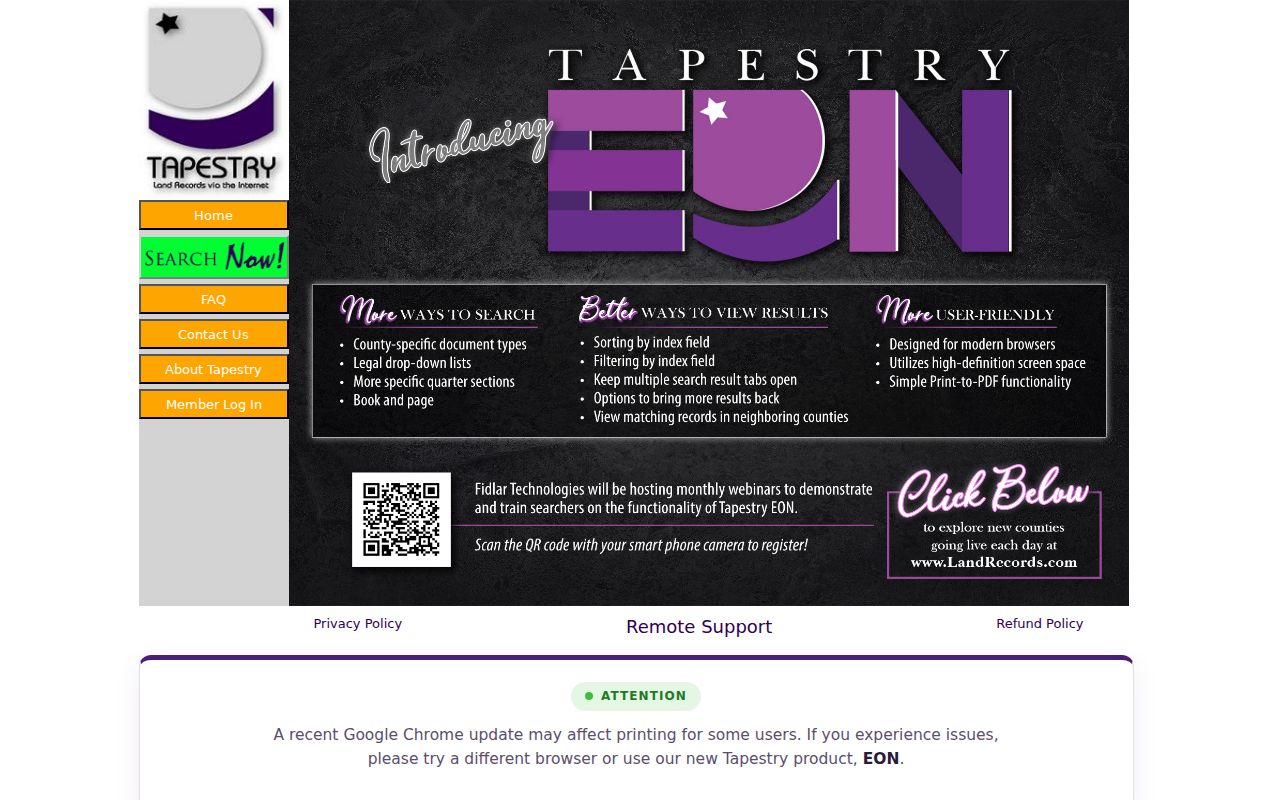
The gateway screenshot identifies the access service only, not a named instrument. Open an actual deed result before reporting parties, numbers, image availability, consideration, or legal-description wording.
Walk Clark County's Grantor-Grantee Chain Backward
Start from a parcel confirmed in the Clark County assessor or GIS tool. Then find the current owner's acquisition deed. The owner should appear as the grantee. Read the grantor's name, then search that name as grantee on the earlier acquisition deed. Keep repeating, checking the legal description at every step. This method is safer than collecting every deed under one surname.
- Confirm the state key, situs, and description clue through the Clark County property search.
- Find the current owner's deed as grantee and retain all parties, date, reference, and description.
- Search that deed's grantor as a grantee to locate the preceding transfer.
- Check releases, liens, easements, covenants, plats, and corrections tied to the land.
- At the online floor, continue through office computers, books, plats, and historical collections.
- Grantor
- The party conveying the interest described by the instrument.
- Grantee
- The party receiving that stated interest.
- Chain of title
- The ordered sequence of recorded transfers tied to the same land.
- Book/page or instrument number
- The reference used to retrieve and cite the document.
Walking the Clark County chain backward also demands date discipline. An execution date can precede the recording date. A corrective or re-recorded instrument may point back to an earlier filing without marking a new sale. Copy any "subject to" clause, reservation, exception, prior reference, or correction language. If the chain runs into an estate, trust, sheriff sale, or tax-sale process, collect the authority the deed recites. Then check the matching court or tax record. The deed-type label alone rarely explains the whole transaction.
Clark County's Three-Office Deed Route
A deed in Clark County makes three stops before recording. First is Assessor review in Room 104. Then comes the Auditor transfer in Room 106. The recording itself takes place in Room 102 at 300 Corporate Drive. The Recorder recommends an attorney or a title company for deed preparation. Small errors can stop the whole filing. A missing Auditor stamp, an inadequate legal description, an execution defect, or a fee problem will each halt a document at the counter. The official Recorder page posts the office's guidance on documents, contact, access, and recording requirements.
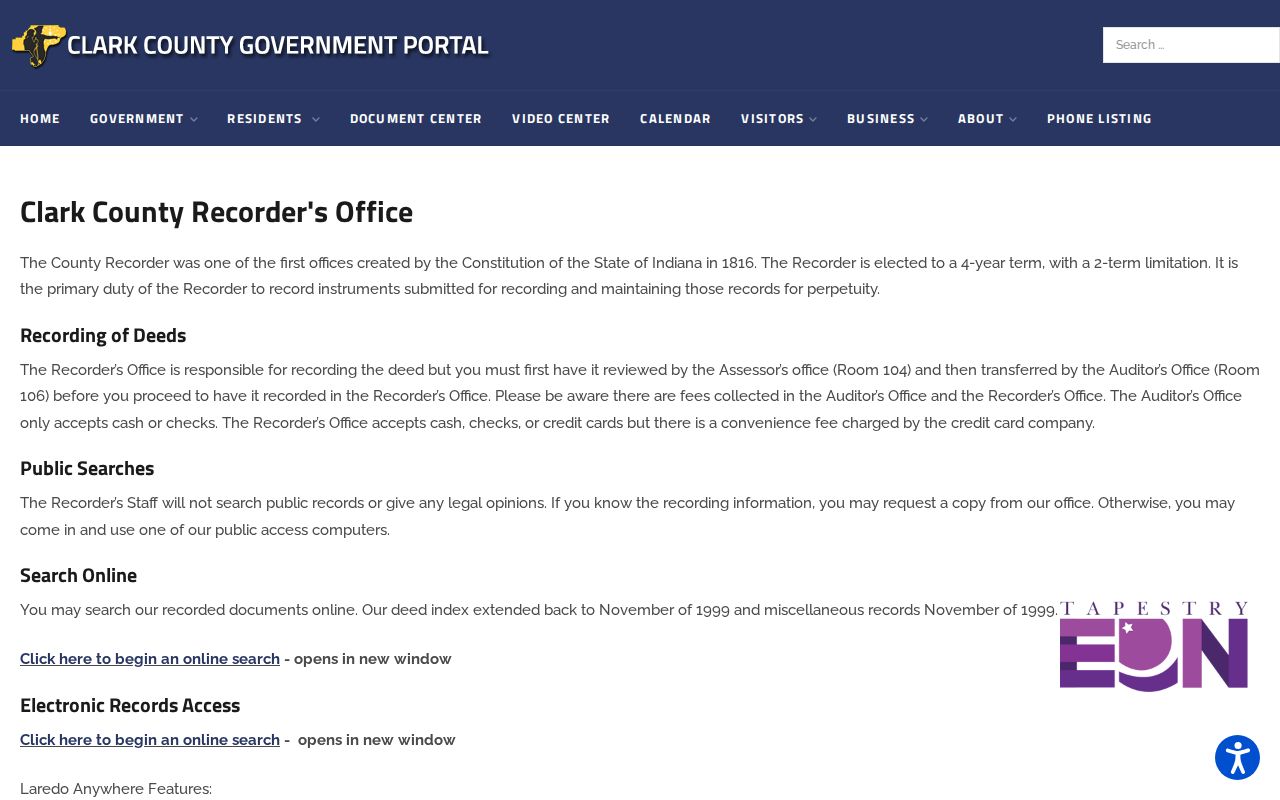
Before a visit or submission, recheck hours, fees, and portal instructions on the county page. The filing checklist still applies to each instrument. The Recorder publishes its rejection reasons, and they cover a lot of ground. Illegible documents get turned away. So do instruments with a name mismatch under IC 36-2-11-16, missing prepared-by information, a missing grantee address under IC 32-21-2-3, an absent cross-reference, an incomplete legal description, or no notary. Content unrelated to Clark County also fails. The office also looks for an SSN affirmation under IC 36-2-11-15(d).
Let the Clark County Legal Description Control
Names and street addresses change; land does not. That is why the legal description controls a Clark County deed. For subdivision property, keep the subdivision name, section or phase, lot number, plat reference, and any amendments. Section-township-range and metes-and-bounds land demands more. Preserve every call in the original description. Easements, rights-of-way, splits, combinations, and condominium interests may each carry a related but different description of their own.
The Auditor's Plat Room holds township plats. Recorder plats add recorded subdivision and easement context. The Surveyor keeps government corners, surveys, plats, maps, and drainage records but performs no private surveys. Maps and indexes settle nothing between neighbors. An index match never resolves a boundary dispute.
Read a description like a checklist: subdivision, phase, lot and block, amended or replatted status, section, township, range, acreage, metes-and-bounds calls, monuments and corners, adjoining owners, roads and rights-of-way, easements, reservations, and the prior recording. A parcel key can change after a split or combination even while an older deed still describes the parent tract. Pull the incorporated plat, along with its dedication and restriction notes, whenever the deed refers to one.
Continue Clark County Deed Records Before 1999
Clark County land records begin far earlier than the online index. Digital deed records reach back only to November 1999. The county itself dates to 1801. The Recorder, an early Indiana constitutional office, preserves instruments in perpetuity. Older work shifts to deed books, office indexes, the Plat Room, and historical collections. Do not stop at a blank screen.
The Indiana State Library map guide points to an 1875 owner map. It also lists Hixson and Sidwell materials. Jeffersonville Township Public Library's Indiana Room holds local history, microfilm, directories, and newspapers. Treat these as dated clues, then return to the deed book for the actual transfer.
Local history can explain a failed search without replacing the record. Jeffersonville's early grid and the former Claysburg name create alternate place clues. The county-seat years in Charlestown do too. So does Clarksville's 1937 flood damage. Even Sellersburg's original spelling, "Sellarsburgh," can hide an address in old indexes. Find the variant in a directory, newspaper, or dated map. Then use the owner, lot, or street clue to reopen the Recorder's books. The online cutoff is not a records cutoff. A missing web result never proves a deed went unrecorded.
Monitor New Clark County Recorder Filings
The Recorder offers a free Property Fraud Alert tied to names in indexed recordings. A matching document triggers a notice to the registrant. The alert cannot block a filing or judge fraud. It never replaces periodic review of the deed index. An unfamiliar notice deserves a close look. Inspect the instrument, compare the parcel and legal description, and contact the Recorder.
Order a Clark County Deed Copy
First check whether the portal makes an image available under its current terms. If it does not, use the public computers. You can also contact Steve Gill, Clark County Recorder, 300 Corporate Drive, Room 102, Jeffersonville, IN 47130; 812-285-6235; Monday through Friday, 8:30 a.m.–4:30 p.m. Recording stops at 4:00. When you order, supply the parties, the instrument type, and the approximate date. Include the reference and the description.
Copies up to 11×17 cost $1 per page under the published schedule. Larger copies run $5 per page, and certification adds $5. Deeds and other instruments, including re-recorded ones, carry a separate $25 recording fee. Ordering a copy is not the same as recording a deed. Verify the current schedule before paying.
Say whether you need an ordinary image or a certified copy. Note the purpose, such as a property transaction or proceeding. Request every exhibit containing the legal description. Keep the receipt, the complete recording reference, and all attachment pages together. A separated attachment can make an otherwise correct deed copy misleading for later researchers.
Recorded, not guaranteed. Clark County deed records show instruments accepted for recording. The index is not a title opinion, cannot reveal every unrecorded interest, and does not guarantee clear ownership.